
Timeline 1972-1975
Bored with my work in Biophysics Division on Human Serum Albumin structure and function, I persuaded Derek Smythe, head of the Peptide Chemistry Division at the (former) Medical Research Council's National Institute for Medical Research to let me collaborate with him for an indefinite period – (I was a rather rootless pre-tenure post doc then). He agreed (a free post doc! What's not to like?). I started work on 'C-fragment' – the 31 residue carboxy terminus of the known hormone, β-Lipotropin from pig pituitary glands. The fact that Derek’s source was pigs didn't in the least detract from the human interest of these molecules, as homologous compounds were found in human pituitary glands.I experienced my first research 'Eureka Event' in after Derek Smythe gave a talk in London which was attended by a researcher from University of Aberdeen: John Hughes. As part of the talk Derek showed the amino acid sequence of β-Lipotropin C-Fragment. After the talk, an amazed John Hughes revealed to Derek that the amino terminal 5 residues of C-Fragment was identical with one of two peptides he had recently characterised in an heroic search in brain for the morphine receptor ligands.
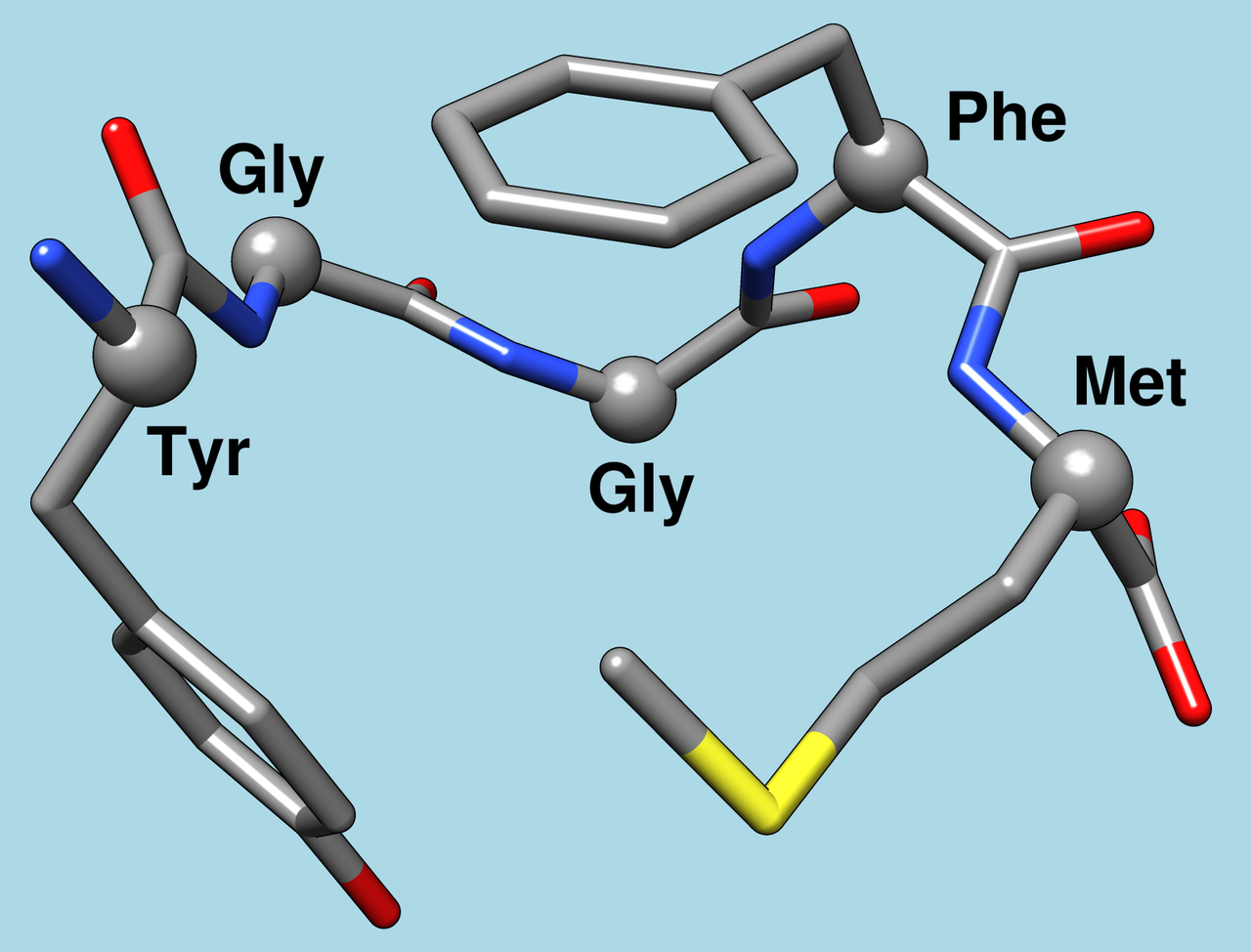
John Hughes described his work with physiologist Hans Kosterlitz on the extremely difficult isolation of two short peptides that had analgesic activity when administered to rats. For centuries morphine and related plant alkaloid drugs known collectively as opiates had been known to have strong pain-killing properties. That the new peptides discovered in Aberdeen had true opiate-like activity was confirmed when the peptides' pain-killing effect was blocked by the synthetic drug naloxone. Naloxone is a classical antagonist of opiate drugs (used in resuscitating people who have overdosed on opiate drugs). Hughes and Kosterlitz considered that they had discovered the long sought ‘endogenous morphine’ present in the brain and they christened their peptide molecules ‘enkephalins’ from the Greek meaning ‘in the head’. Although the researchers had only tiny amounts of material, a London scientist, Howard Morris, had been able to determine the amino acid sequences of their peptides: Tyr-Gly-Gly-Phe-Met (YGGFM) and Tyr-Gly-Gly-Phe-Leu (YGGFL). Derek Smyth's C-Fragment of β-Lipotropin was: YGGFMTSEKSQTPLVTLFKNAIIKNAYKKGE An image of Met-enkephalin is illustrated left.
It was all Derek Smythe could do to contain himself. He got as much information as he could from Hughes, and then returned to the Mill Hill laboratory on a mission!. Overnight, the research direction of the laboratory changed and, soon afterwards, so did the work of several other labs at NIMR. We were all working flat out on pain-killing peptides. Not just Derek, but most of us as his co-workers, felt we could make our names and enhance our career prospects with this unexpected line of investigation.
A modern day message: Collaborate - don't compete with your colleagues!Inevitably competition soon surfaced within our ‘alpha male’ group. Our latest results and biological samples were jealously guarded as we prepared papers for publication giving our own differing interpretations about analgesic peptides in the brain. There were petty arguments about the order of our names on the papers and the degree to which different colleagues had contributed to a particular publication. There were arguments as to who would present the current work at the latest international conference in this area. Once the biological activity of these peptides became widely known, the term ‘enkephalins’– substances in the head – was replaced by the much sexier ‘endorphins’ (endogenous morphine-like substances). Of course, we were not the only lab with deep interests in this field. One of the American pioneers in opiate research was Sol Snyder with his young research assistant Candace Pert. Prof Snyder and researchers had struggled for years to identify a natural analogue of morphine in brain, but at the time lacked the key technology and know-how (mass spectrometry and amino-acid sequence analysis) that could detect and identify the vanishingly small amounts of the peptides involved and had all but given up or, more probably, failed to get further research funding.
Hughes and Kosterlitz’s enkephalin discovery came about through a combination of techniques in very different fields; biochemistry, physiology and mass spectrometry. Specialists in these fields did not normally attend the same meetings or read one another’s’ research papers. But the Aberdeen scientists shared their discovery with scientists who could help them take it forward quickly, to mutual benefit. There was a strong message in this type of ‘win-win’ collaboration which in Derek’s lab at that time we were not intellectually mature enough to heed. We had only to look at past precedents to see the benefits of wider collaboration staring us in the face, but we were young and headstrong then and, honestly, how many of us at any age seek out and learn from the lessons of history?
Might an 'endogenous analgesic' explain acupuncture?One morning, there was quite a buzz when I turned up in the lab. The theory of the week was that endorphins might explain how acupuncture worked. The notion was that by inserting needles into tissues one might stimulate nerve cells to release stored endorphin peptides. It would be these peptides that produced acupuncture’s widely reported analgesic effects. It was proposed to invite one of the practitioners from a London acupuncture clinic to visit the lab. He would carry out suitable needle insertions into lab ‘guinea pigs’, also known as post docs. Blood samples would then be taken and assessed for opiate peptides using a highly sensitive immunological test. I decided this was above and beyond the call of duty and was graciously excused as an outsider. I did not see the procedure itself. Chris Snell later told me that the Chinese gentleman who came had such thick bottle lenses in his spectacles and such an uncertain manner, that the experiment would probably have been invalidated by the ‘guinea pigs’ sheer terror of this person brandishing needles . Our C-Fragment endorphin was known to come from the pituitary gland hormone, lipotropin, which was released into the bloodstream under stressful circumstances! In the end I believe the acupuncture results were inconclusive.
Knowledge of the homology of Derek Smyth’s C-Fragment with the Aberdeen enkephalins spread rapidly within the institute – Derek was an irrepressible communicator which was both a joy to those who knew him and threat to himself as will be seen later. The Institute’s Director, Sir Arnold Burgen, was quick to offer the services of his own pharmacology department’s scientists for assessing the biological activities of the newly discovered peptide family. Derek could hardly demure, since apart from the Director’s seniority, his own lab did not have the skills required. In fact more such inter-departmental collaboration throughout the MRC would have greatly promoted some of the key discoveries. However, as mentioned, there is always a tension in basic scientific research between ‘ownership’ of new discoveries (usually credited those first to publish) and the need for collaborating with potential competitors in order to make rapid progress. Fame is the spur, they say.
Competition obviously heated up in the outside world following the first publications from our laboratory. Derek was quick and very vocal in denigrating the shorter peptides discovered by the Aberdeen scientists. The amounts of these in brain were very small and their analgesic effect quickly terminated; presumably by enzyme digestion. Derek’s C-Fragment on the other hand was much more abundant. It was more potent in a rat ‘tail-flick’ assay and its analgesic effects longer lasting. Derek also had a number of other arguments to support his case for having recognised the 'true' endogenous opiate receptor ligand. He was certain that the small enkephalins were actually artefacts – produced by enzyme action on Derek’s C-Fragment, which he was now calling beta endorphin. Hence ‘his’ peptide should be recognised as the biologically relevant one. Scientists are meant to be very cautious about assertions like this and prove them by painstaking experiment rather than speculation. However, most of us signed up to Derek’s claims. Firstly, we wanted to stay working with him. Secondly, he was a very persuasive character if a bit black and white about who was on his side and who was the enemy. Thirdly, it really suited us to be working on something so apparently significant.
Science progresses through the discovery ofexeptions to cherised ideas!Derek’s claim to have the ‘real’ endorphin was the presence of another opiate-active peptide variant. Two peptides with opiate activity had been identified by Howard Morris in London. One of these variants could not have been derived by enzyme action on Derek’s C-Fragment, but must have been produced from a different protein, not present in Derek’s pituitary extracts. This observation did not fit our hypotheses and so was conveniently pushed to the back of our minds. With hindsight, instead of challenging this inconvenient fact, we should have designed and carried out the relevant experiments ourselves to prove or disprove the presence and relevance of this material in brain. In science it is nearly always the exceptions to a hypothesis, which lead to breakthroughs in understanding.
Over in the US in the National Institutes for Mental Health (NIMH) Post doc Candace Pert was working in Solomon Snyder's group This American neuroscientist made wide-ranging contributions to neuropharmacology and neurochemistry. In an exhaustive search in brain tissues for the opiate receptor, Candace was finally successful using the radio-labelled morphine antagonist; naloxone in tissue extracts separated with Pedro Cuatrecasas's ground breaking filtration binding equipment for ligand binding assay. After learning this, Sol Snyder was immediately in on the transatlantic side of the 'race' to discover and determine endogenous opiate ligands. Other workers in Sol's group (belatedly) extracted the same peptides.
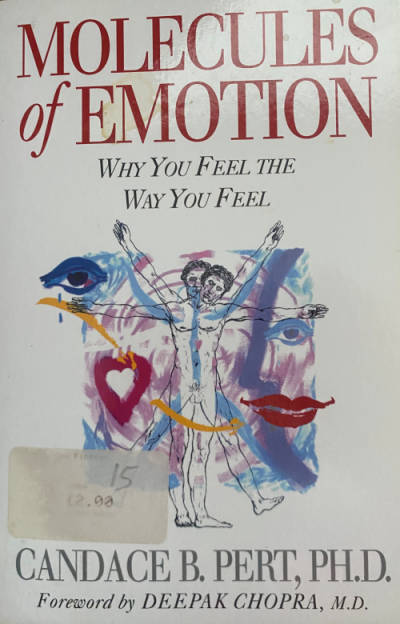
A culture of gender discrimination in research?Candace was to learn from a third party that her boss, Sol Snyder, John Hughes and Hans Kosterlitz had been nominated for the American Lasker award (in Autumn 1978 Sol Snyder, John Hughes and Hans Kosterlitz received the Lasker Award (for their work on the opiate receptor and endorphin work. The Lasker is sometimes referred to as "America's Nobel “. Candace Pert - who essentially made the breakthrough identification of the opiate receptor in brain tissue wasn't mentioned. Candace was invited into the office of renowned Nobel Laureate Julius Axelrod, to help him fill in the form for the Nobel Committee proposing Snyder, Hughes and Kosterlitz (then Lasker award recipients) for the Medicine Nobel Prize. At this stage Candace started to fight back. No more than 3 living scientists can receive the Nobel award. Sensing betrayal, Candace refused to sign off on the application. The ongoing controversy (may have) denied the 3 male scientists that year's Nobel. There appears no doubt that at the time a discriminatory attitude toward female researchers was evident at NIMH. We all well recall the exclusion of Rosalind Franklin from the Nobel for the structure of DNA! Candace went on to detect many neuropeptide receptors (e.g. Substance P) throughout the body tissues. Persona non grata at NIMH for a time, she and her partner later set up a biotech comap a company. I was briefly in contact with Candace at the time, but never met her. What I have written about her here is taken from her book “The molecules of Emotion” published in 1997. It makes fascinating reading on many fronts.
Fast forward to 2025
There are four main types of opioid receptors presently known. Mu μ receptors, Delta δ receptors , Kappa κ receptors and Nociceptin NOP receptors. Mostly located in the CNS, these are implicated in mood regulation and pain perception, stress responses and emotional regulation. They are also present in the GI tract, On immune cells and in heart and vascular tissues. Morphine and analogues truly have ubiquitous effects! Their naturally occurring ligands are Endorphins (from pro-opiomelanocortin bind Mu μ receptors. Enkephalins ( including met and leu enkephalin) bind to Delta δ receptors, Dynorphins (dynorphin A, B and neoendorphin) bind to Kappa κ receptors and Endomorphins ( 1 and 2) which bind tightly to Mu μ receptors. β-Lipotropin can be cleaved into smaller peptides. In humans, γ-lipotropin, β-MSH, and β-endorphin, are all possible fragments of β-lipotropin, The enzyme which cleaves these and many other pro-proteins cuts polypeptide chains and paired basic amino acids. Candace Pert was one of the first scientists to discover and report on opiate and other neuroactive peptide receptors in many other body tissues. Sadly her work (and indeed a small company she set up with her partner) did not receive grant support or investment. The action of neuroactive peptides outside the CNS would seem to merit further research even today!
An amusing tale (or should that be tail?)The world famous pharmacologist Henry Dale (another NIMR alumnus!), was asked by close friends to recommend something they could use to calm their pet cat. They intended taking the animal with them on a ferry crossing to France (before the era of quarantine and animal chips of course). Dale rather absently recommended and supplied morphine. After his friends had left on their voyage he suddenly recalled that cats react adversely to morphine becoming violently agitated. He awaited his friends’ return with deep misgivings. Sure enough, when he met them again and asked about the crossing the wife said: “Well Dr Dale, we gave our cat the morphine you suggested, but it seemed to go absolutely mad on the crossing.” Here she smiled gratefully and added: “So what it would have been like if we had not given it that morphine, we dread to think.” Dale did not enlighten them.
References for my own modest contributions!
"Lipotropin C-fragments has a COOH-terminal sequence with high intrinsic resistance to the action of exopeptidases" Geisow M.J. & Smyth D.G. (1977) Biochem, Biophys. Res. Commun. 75, 625-629."Preparation and properties of lipotropin C-Fragment with anionic substituents attached to the lysine residues". Geisow M.J. & Smyth D.G. (1977) FEBS Lett. 81, 431-434.
"The analgesic activity of C-Fragment depends upon the carboxyl terminal tetrapeptide". Geisow M.J., Deakin J.W.F., Dostrousky A. & Smyth D.G. (1977) Nature 269, 167-168.
"The susceptibility of C-Fragment to endogenous endopeptidases". Smyth D.G., Austen B.M., Geisow M.J. & Snell C.R. (1977) in: Proceedings of the Vth American Peptide Symposium (Goodman M. ed.). Ann Arbor Science Publishers 103-
"Biogenesis and metabolism of lipotropin C-Fragment". Smyth D.G., Austen B.M., Bradbury A.F., Geisow M.J. & Snell C.R. (1977) in: Centrally Acting Peptides (Hughes J. ed.) MacMillan 231-
"Lipotropin C-Fragment; the fundamental opioid peptide in brain". Smyth D.G., Austen B.M., Geisow M.J. & Snell C.R. (1977) in: Proceedings of the VI International Congress of Endocrinology, Elsevier, North Holland 327-